
MATERBOOK
MATERbook #1
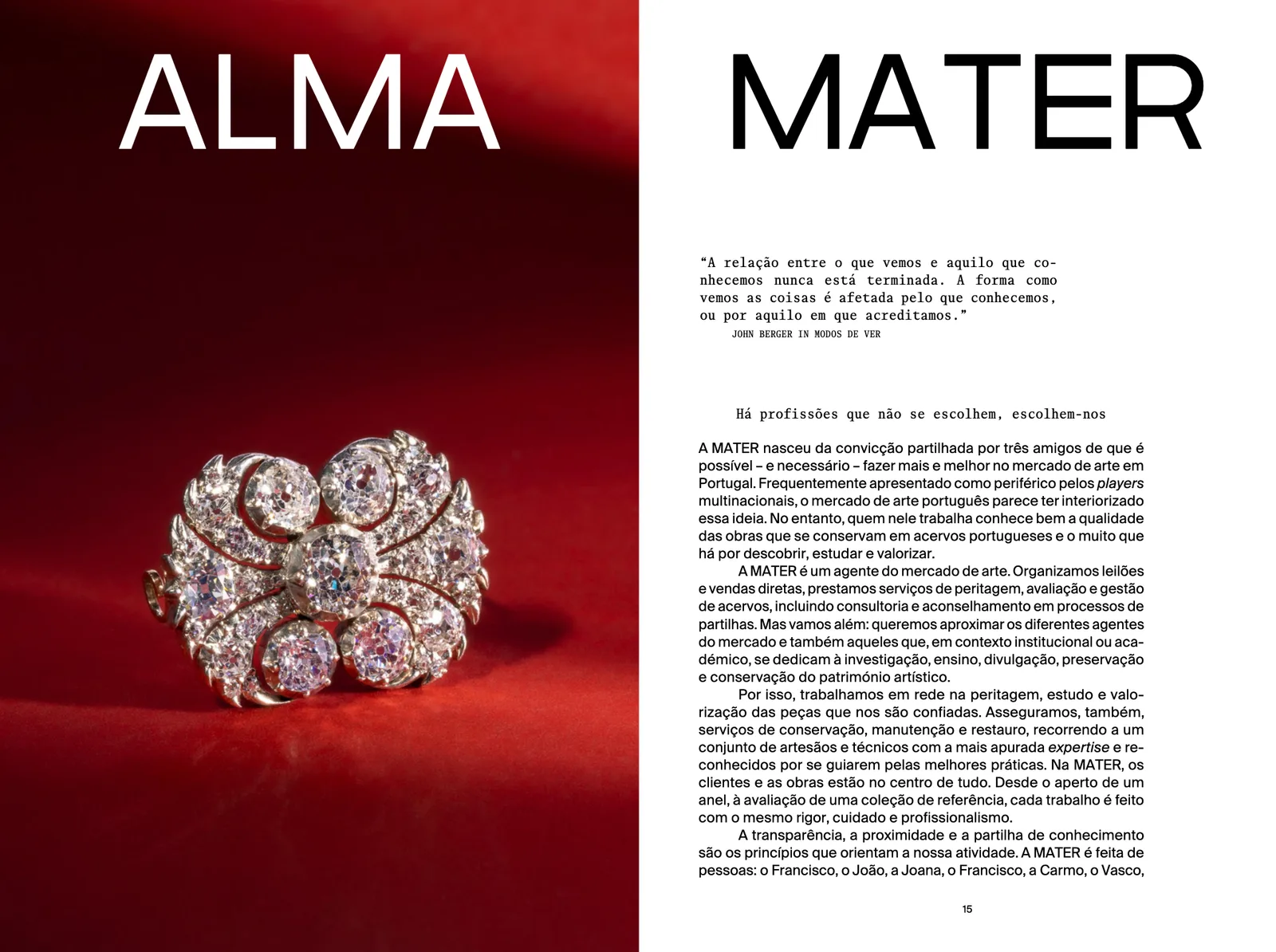
Born into a digital world and at the dawn of the age of artificial intelligence, MATER seeks to rethink certain practices of the traditional auction market. The catalogue is one of them. Does it make sense to publish a printed catalogue listing all the lots for sale, when the digital catalogue offers an incomparably better view of the works through high-resolution images, whilst also providing unlimited space for descriptions, notes and supplementary texts? Furthermore: what use is a traditional catalogue to most clients once the auction is over? We do not view the answers to these questions as a rejection of print publications. On the contrary: we believe that particularly significant auctions deserve to be celebrated and accompanied by a printed catalogue. We wish, however, to do so in a different way – more rationally, with a purpose beyond the commercial and a lifespan for the published volume that extends beyond the auction date. This is how we conceived the MATERbook. Its publication will accompany the auctions we consider particularly significant, positioning itself as a periodic cultural publication centred on the lots offered for sale. In addition to these, there is scope for much more: essays, opinion pieces, research and criticism. We believe that the MATERbook should encourage discovery, questioning and the deepening of knowledge. In this first issue, we are privileged to feature a group of distinguished contributors who share their specialist knowledge on works of art that we have deemed particularly interesting and suitable for exploring and sharing knowledge — ranging from exceptionally rare and sought-after pieces to works which, whilst not commanding high valuations, possess remarkable historical and artistic value and therefore deserve special attention. We hope that MATERbook will help to broaden our perspective on artworks, challenging the notion that their value is measured solely by their price. Because knowledge is the key to appreciation: understanding what lies before us, recognising what makes a piece unique, and discovering what we did not yet know to look for.